Analytical methods to evaluate antibody conjugation on polymeric nanoparticles
Maryam Parhizkar – Associate Professor, Pharmaceutics, UCL; Daniel Stuckey – Professor of Cardiovascular Imaging, UCL; David Shorthouse – Lecturer in Pharmaceutics, UCL
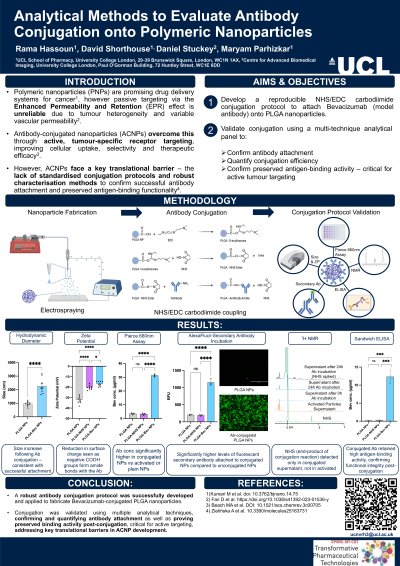
Introduction: Antibody-conjugated nanoparticles are a promising strategy for targeted cancer therapy, addressing limitations of passive targeting, and reducing systemic toxicity. Progress is significantly hindered by the lack of reliable analytical methods to confirm antibody attachment, validate conjugation protocols, and demonstrate preserved activity. This study aimed to establish a reproducible protocol for conjugating Bevacizumab, an anti-VEGF antibody, to PLGA nanoparticles, and to validate conjugation using a panel of analytical techniques suitable for subsequent in vivo biodistribution studies (Figure 1).
Learning Objectives:
Assess carbodiimide chemistry for antibody conjugation to PLGA nanoparticles.
Interpret analytical evidence confirming antibody attachment and activity retention.
Identify characterisation techniques to establish successful antibody conjugated nanoparticle production.